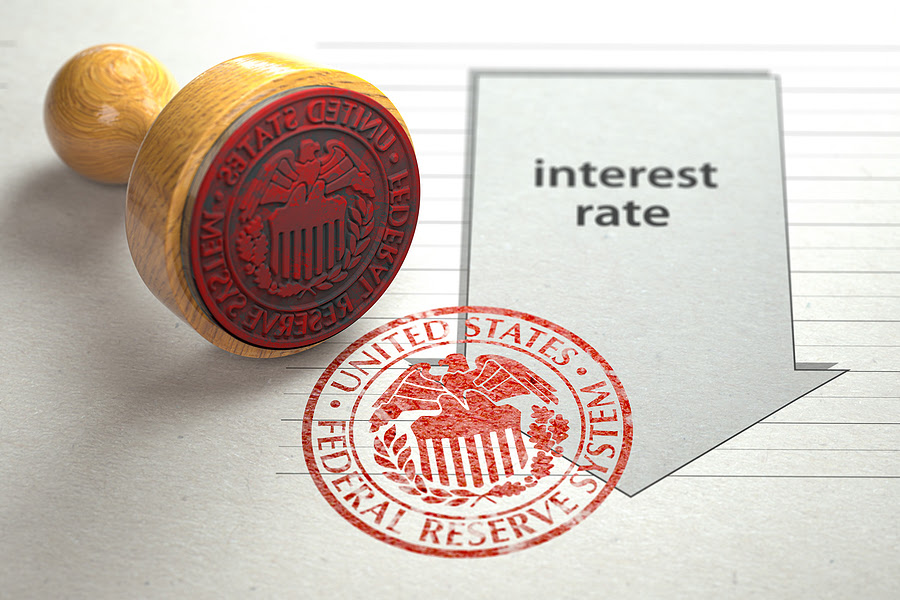
Financier and lawyer Kevin Warsh was confirmed as chair of the Federal Reserve by the U.S. Senate on May 13 and officially took his position on May 15. The Fed’s dual mandate from Congress is promoting maximum employment and stable prices (i.e., controlling inflation).
Warsh’s first meeting of the Federal Open Market Committee (FOMC), the agency’s primary body for steering national monetary policy and dictating interest rates, will take place on June 16 and 17. The FOMC meets eight times a year and has 12 voting members. These members include the seven-member Federal Reserve Board of Governors (including the chair), the president of the Bank of New York, and four of the remaining 11 Reserve Bank presidents who each serve one-year FOMC terms on a rotating basis.
Hawks and Doves
Warsh replaces economist Stephen Miran on the Fed’s board of governors. Miran was appointed by President Trump as a governor in September 2025 to fill out the time left on the term of former governor Adriana Kugler, an economist who had resigned unexpectedly in August 2025. Miran was considered a Fed “dove,” favoring lower interest rates and prioritizing maximum employment and economic growth over strict control of inflation.
Warsh had previously served on the Board of Governors from 2006 to 2011, when he was considered to be a Fed “hawk,” advocating for higher interest rates to keep inflation low over maximizing employment. Warsh most often supported aggressive measures such as tightening the money supply to stabilize prices despite slow economic growth and surging unemployment amid the 2008 Great Recession. Whether he will bring that same approach to his role as Fed chair remains to be seen.
Former chair Jerome Powell, in a break with tradition, will stay on as a Fed governor until January 2028 to complete his term. Powell, who has been seen at various times as both a hawk and a dove, has said he plans to keep a low profile as a governor. However, with Miran’s departure, the FOMC’s overall composition shifts in a more hawkish direction and complicates any effort to deliver near-term rate cuts.
What Warsh Faces at the Fed
The Fed under Warsh faces several dilemmas. The macro threats include turmoil from the Iran War, energy shocks, rising inflation pressure, massive and growing federal debt, and tariff-strained effects on global trade. The Iran War oil shock is not occurring in isolation; it is the latest in a series of self-inflicted supply disruptions that began early in 2025. U.S. tariffs have risen fivefold, adding nearly one percentage point to inflation.
A Commerce Department report on May 28 showed the personal consumption expenditures (PCE) price index, which the Fed tracks as a key inflation measure, jumped 3.8% year-over year and the largest rise since May 2023.
The government also revised down the pace of growth in consumer spending in the first quarter of 2026 to 1.4% from the previously reported 1.6% annualized rate. Overall gross domestic product (GDP) growth for the first quarter was cut to a 1.6% rate from the 2.0% pace estimated in April 2026.
The Iran War has disrupted shipping in the strait of Hormuz, boosting energy prices, as well as straining global supply chains and causing shortages of a wide range of goods, including fertilizers, aluminum and consumer products. The national average retail gasoline price shot up 12.3% in April, according to data from the U.S. Energy Information Administration. Gas prices have increased more than 50% since the war began on February 28.
Consumers are also paying higher prices for other goods and services. Inflation was already elevated before the war, largely because of the Trump administration’s sweeping tariffs.
“The inflation picture is becoming increasingly uncomfortable for the Fed,” Olu Sonola, chief U.S. economist at Fitch Ratings, told The Guardian. “Price pressures are likely to persist over the next few months, and while the Fed cannot fix a supply shock, it cannot ignore one that is feeding into underlying inflation.”
As a member of the FOMC, Warsh will be the only one currently on the committee to have been appointed by President Trump, who has relentlessly pressed for lower interest rates. However, it is highly unlikely for Warsh to be able to influence enough members of the FOMC to vote for a cut without any data pointing that direction.
Making the case for rate cuts will be even harder at a time when energy costs have surged, pushing up headline inflation measures. What is clear is that the longer energy prices remain elevated, the greater the risk that higher inflation becomes embedded in the economy.
Labor, while vulnerable, has also held up relatively well, obviating the need for any immediate action. Job growth has been nearly nonexistent over the past year—a circumstance that normally would call for more immediate action to stimulate growth. But the Trump administration’s immigration crackdown and the slowing population growth in the U.S. mean that low levels of hiring haven’t translated to a significantly higher unemployment rate. Consumers are still spending at a healthy clip, even as they stress over the cost of living.
The Easing Bias and Rate Signals
In April’s FOMC meeting, the last chaired by Powell, four votes dissented from the committee’s decision to pause rates between 3.5% and 3.75%. Of those dissents, three were not against the pause itself but instead opposed what they called the FOMCs language bias toward easing rates with inflation surging amid a war-fueled oil rally.
The trio wanted language pointing to such an “easing bias”—a policy signal that the Fed was leaning more toward cutting interest rates as their next move than raising them—removed from the guidance. There had not been four dissents in an FOMC meeting since October 1992, a time before the central bank announced decisions in real time.
Investors had largely ruled out the idea of any rate cut in 2026 as new inflation risks began to mount. But the balance has recently tilted toward the potential for the central bank to raise interest rates in 2027. No Fed official has so far called for a rate increase, but a growing number appear to be urging the central bank to signal that a rate increase is as equally plausible as a rate cut.
Warsh’s Next Move?
Former Fed staff and officials have said the most likely first step would be for Warsh to commission a range of internal reviews. After later debates at the FOMC, we may see potential changes to rules for bank reserves—one possible path to a smaller balance sheet—or the incorporation of different inflation data in policy discussions.
Warsh has suggested that balance-sheet reduction will be a key part of his proposed overhaul of the central bank.
Following the 2008 Great Recession and the 2020-21 pandemic, the Fed used quantitative easing—an unconventional monetary policy in which the central bank created new money to purchase large-scale assets such as government bonds—to inject liquidity into the financial system, lower rates, and encourage lending and investment.
This quantitative easing added trillions of dollars to Fed holdings; the central bank’s balance sheet currently stands at approximately $6.7 trillion. The Fed’s assets are matched by liabilities, which are critical for the economy’s smooth functioning. But the Fed can’t shrink its balance sheet without shedding liabilities.
It also seems likely that Warsh wants to change how the Fed communicates and the frequency of communications.
There is broad dissatisfaction about aspects of the quarterly Summary of Economic Projections (SEP), including the “dot plot” chart of rate projections, which could provide a possible area for faster reform. Warsh has indicated he would like to change the SEP. However, central bank transparency has been frequently emphasized since the 2008 financial crisis.
Conclusion: Stay Tuned
In 2025, Fed officials argued they could safely look through the tariff-driven inflation and continue cutting rates. But maintaining such an easing bias in 2026 is much riskier, with the energy-price shock landing on top of the earlier tariff shock amid stubbornly high inflation.
The post-pandemic inflation lesson that the Fed learned painfully—and somewhat later than it should have—was that a sequence of supply shocks, each one seemingly transitory on its own, can compound into persistently higher inflation when demand outstrips constrained supply. How Warsh and the Fed deal with the current volatile economic landscape will be a central economic factor for the rest of the year.
As always, if you have any questions about this report or any other questions, please reach out to Bowen Asset at info@bowenasset.com or (610) 793-1001.
Disclaimer: While this article may concern an area of investing or investment strategy in which we supply advice to clients, this document is not intended to constitute a complete description of our investment services and is for informational purposes only. It is in no way a solicitation or an offer to sell securities or investment advisory services. Any statements regarding market or other financial information are obtained from sources which we and/or our suppliers believe to be reliable, but we do not warrant or guarantee the timeliness or accuracy of this information. All expressions of opinion reflect the judgement of the author on the date of publication and are subject to change.
Bowen Asset Management LLC is registered as an investment advisor and only transacts business in states where it is properly registered or is excluded or exempted from registration requirements. Past performance should not be taken as an indicator or guarantee of future performance, and no representation or warranty, express or implied, is made regarding future performance. As with any investment strategy or portion thereof, there is potential for profit as well as the possibility of loss. The price, value and income from investments mentioned in this report (if any) can fall as well as rise. To the extent that any financial projections are contained herein, such projections are dependent on the occurrence of future events, which cannot be predicted or assumed; therefore, the actual results achieved during the projection period, if applicable, may vary materially from the projections.