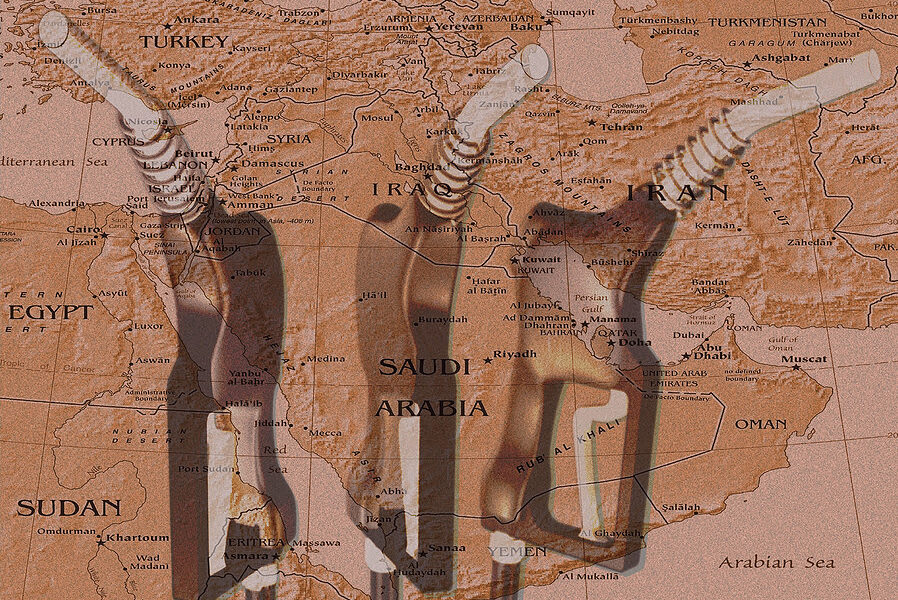
Markets continue to react to minute-by-minute developments regarding the ongoing U.S./Israeli war with Iran, which has effectively closed the Strait of Hormuz, narrow, strategic waterway in the Persian Gulf through which roughly 20% of the world’s oil and liquid natural gas pass, as well as affecting the global supply of helium, fertilizer, and aluminum.
The war’s negative fallout is exposing other economic vulnerabilities. Some of these have been evident for some time, such as persistent inflation in the U.S. and private credit excesses.
Although the U.S. economy remains resilient, the scale and persistence of energy disruptions raise noteworthy risks for growth, inflation, and decision-making by central banks. A prolonged conflict would amplify economic effects and could further test investor resolve.
If the fighting ends, the market will likely react positively. However, this does not change the concerns from the impact of supply chain disruption for energy and related products from the closing of the Strait of Hormuz.
The War
The energy shock from the Iran War is the most immediate threat. The damage from weeks of disruption is already broadening. Higher crude oil prices raise costs for manufacturers, airlines, and logistics firms, compress margins for consumer businesses that cannot pass costs through to consumers fast enough, and function as a tax on household spending.
Higher oil prices lead to higher gasoline prices and that pressure extends beyond the pump. Rising fuel and transport costs could push up the price of food and a wide range of goods in the U.S., as the full impact of higher oil prices has yet to hit.
A secondary shock has to do with fertilizer. The United Nations Conference on Trade and Development estimates that one-third of global fertilizer trade transits the Strait of Hormuz. Fertilizer is an essential need that farmers rely on. When the fertilizer supply chain is threatened, the ripple effects impact farms, grocery stores, and kitchen tables. Recent disruption in liquid natural gas supplies in the Middle East have shut down or limited output in fertilizer plants using natural gas. The price of urea, the most widely used fertilizer, nearly half of which is exported from Gulf countries through the Strait, is currently 60% higher than this time last year. A similar fertilizer disruption occurred during the war in Ukraine.
Farmers are already facing tight margins and declining commodity prices. A sudden spike in fertilizer costs or disruption in availability could put even more strain on farmers. Fertilizer decisions that are being made currently will impact harvests months from now. If the disruption persists into late April, optimal fertilizer application and planting windows could be missed in key regions, converting a supply delay into a lost season. Food price implications lag by three-to-six months, but will be structural, not transitory.
Another supply shock from the war is the shipment and use of helium. Helium is used in health care to keep MRI machines running. It is also essential to the manufacture of high-end semiconductors, such as Nvidia’s AI accelerator chips. Any shortages of the material could squeeze an already strained supply chain.
Airgas Inc., one of the largest distributors of packaged gases in the U.S., will curtail helium shipments after Qatar halted production at a major liquid natural gas facility following an Iranian attack. The firm will provide some customers with up to half of their normal monthly helium deliveries, and it will add a $13.50 per hundred cubic feet surcharge.
Aluminum requires large amounts of energy to extract and process, making it susceptible to natural gas shipping problems in the Strait of Hormuz. Iran has also hit aluminum producers in the United Arab Emirates and Bahrain in response to earlier attacks on two Iranian steel plants. Emirates Global Aluminum sustained significant damage to its production plant in Abu Dhabi. The Iranians also struck Aluminum Bahrain, home to the world’s largest aluminum smelter. Aluminum Bahrain had already suspended 19% of its production capacity due to being unable to get supply through the Strait of Hormuz.
A plant in Qatar, jointly owned by QatarEnergy and Norwegian company Norsk Hydro, scaled its aluminum production back to about 60% capacity because it had trouble getting the gas it needed to extract the metal. According to the London Metal Exchange benchmark, prices of aluminum are up about 4% since the war started on February 28.
Private Credit and the Fed
Private credit is a nearly $2 trillion market where non-bank lenders fund companies, big and small. It had been showing signs of strain for a while, prompting investors to start pulling out funds. Defaults in U.S. private credit climbed to 5.8% in the 12 months through January 2026, according to Fitch Ratings, the highest rate since the firm began tracking defaults in August 2024. Private credit’s heavy exposure to software companies has fanned concern that unseen risks have built up in what’s effectively a shadow banking system.
The oil shock may worsen the strains. Higher energy costs raise operating expenses for many of the companies relying on private credit. The specter of higher inflation has pushed out the expected timing of rate cuts that would have eased refinancing.
For now, continued conflict in the Middle East and high oil prices will likely tie central banks’ hands. In the near term, the war has widened the range of possible outcomes for the economy without clarifying which one is most likely, thus it is likely to freeze the rate-setting committee in place. Oil prices could retreat if the conflict is contained or they could surge further if the war escalates, threatening both higher inflation and weaker growth simultaneously.
A supply shock from the war could quickly complicate the Federal Reserve’s policy framework. When inflation is driven by energy costs rather than excess demand, traditional monetary tools become less effective. Consequently, policymakers face the difficult balance of stabilizing prices without worsening the economic slowdown. If energy prices spike while growth weakens, the Federal Reserve risks confronting the classic stagflation environment that haunted earlier energy crises.
Fed chair Jerome Powell has emphasized that to resume lowering rates, officials would have to see progress in reducing inflation, especially goods inflation that has been boosted by tariffs.
On paper, Fed policymakers maintained their median projection for one rate cut in 2026 and one in 2027. Interest-rate markets now show the probability of even one reduction as essentially a coin flip —with the war in the Middle East and spikes in oil only adding to the debate.
Adding to concerns about inflation, the Producer Price Index (PPI) rose 0.7% in February 2026 over the previous month, up from January’s 0.5% gain and more than double economists’ expectations for an increase of 0.3%. This increase was driven by a 5.5% jump in processed energy goods and a 6% increase in unprocessed energy materials.
The sharp increase in energy costs, alongside rising service sector prices, contributed to a 3.4% year-over-year rise in PPI. The 5.5% surge in processed energy goods accounted for 60% of the rise in intermediate demand prices, with diesel fuel rising 13.9%. All of this came before the war started on February 28.
Higher energy prices can meaningfully lift headline inflation in the near term, but the real risk is persistence. If oil prices remain elevated long enough to seep into inflation expectations—or broaden into core price pressures via transport, logistics and input costs—the Fed’s job becomes harder, as the central bank must keep rates higher for longer to restrain inflation while seeking to avoid unnecessary damage to economic growth.
The Middle East conflict may strengthen the case for significantly higher U.S. defense spending. The Trump administration’s proposed increase, combined with reports of rapid early wartime munitions use, could spur additional supplemental spending. Over time, that mix could pressure U.S. debt and deficits, and potentially push long-term Treasury yields higher as investors demand more compensation to hold longer-maturity bonds. Higher yields could lead to higher borrowing costs and become a potential headwind for stock and bond markets alike.
Conclusion: Keep Calm and Carry On
Geopolitical uncertainty can pressure both stock and bond prices at the same time, even when the underlying economy is resilient. The economic, financial, geopolitical, and social fallout will depend heavily on the Iran War’s duration and scope. If the price of oil comes down quickly, the damage may be contained. However, if oil prices stay higher for longer, we can begin to see more impact elsewhere in the economy.
Maintaining perspective and staying committed to a long‑term strategy is a way for investors to navigate volatility and participate in any eventual rebound.
For more on how the war is affecting the petrodollar system and U.S. Treasury markets, see our recent report, The Petrodollar Loop.
Disclaimer: While this article may concern an area of investing or investment strategy in which we supply advice to clients, this document is not intended to constitute a complete description of our investment services and is for informational purposes only. It is in no way a solicitation or an offer to sell securities or investment advisory services. Any statements regarding market or other financial information are obtained from sources which we and/or our suppliers believe to be reliable, but we do not warrant or guarantee the timeliness or accuracy of this information. All expressions of opinion reflect the judgement of the author on the date of publication and are subject to change.
Bowen Asset Management LLC is registered as an investment advisor and only transacts business in states where it is properly registered or is excluded or exempted from registration requirements. Past performance should not be taken as an indicator or guarantee of future performance, and no representation or warranty, express or implied, is made regarding future performance. As with any investment strategy or portion thereof, there is potential for profit as well as the possibility of loss. The price, value and income from investments mentioned in this report (if any) can fall as well as rise. To the extent that any financial projections are contained herein, such projections are dependent on the occurrence of future events, which cannot be predicted or assumed; therefore, the actual results achieved during the projection period, if applicable, may vary materially from the projections.