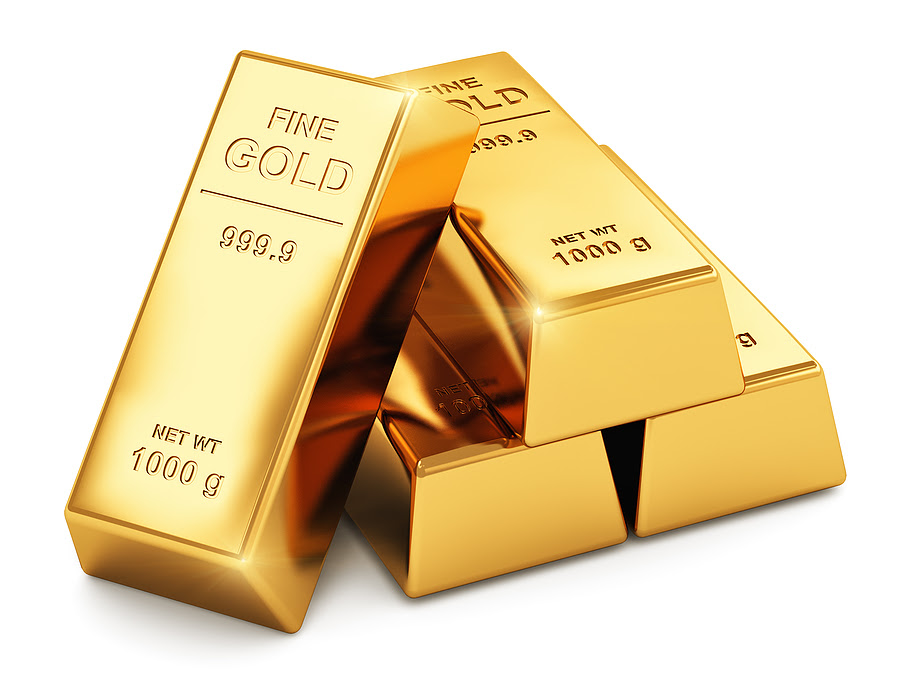
The price of gold increased by nearly 65% in 2025, far outpacing the 17% gain in the S&P 500 stock index over the same period. In January 2026, gold surpassed $5,000 an ounce for the first time. In 2025, the precious metal outperformed most other risk assets, including stocks and cryptocurrencies.
The gold price over the past year has been driven by increased geopolitical and economic uncertainty as well as stock market volatility, reflecting investors’ concern over persistent inflation, potentially unsustainable levels of government debt, and possible overvaluation in the market. Central banks, particularly in emerging markets, aggressively increased their gold holdings to diversify reserves and reduce reliance on the U.S. dollar.
Many central banks have long held their gold stockpiles in London, Switzerland, and New York. However, according to a survey of 50 central banks by the asset manager Invesco and reported on in January 2026, though about half of those banks plan to increase their gold allocation, two-thirds also plan to relocate the bullion stockpiles they hold outside their borders back to domestic vaults for safekeeping.
“Gold has always been the ultimate safe haven,” Rod Ringrow, the head of official institutions at Invesco, told The Guardian in January. “So, in times of political uncertainty and instability you see gold spikes in terms of central banks. It’s a form of protection and a backstop if traditional fiat currencies fail.”
The Golden Mean
Historical evidence does suggest that gold has often been able to provide a cushion against the downside risks that uncertainty and volatility can inflict on an equity portfolio. Gold has also tended to hold up during sudden rises in inflation or during periods of stagflation (a scenario whereby an economy suffers high inflation, high unemployment, and low growth all at the same time).
For the first time since 1996, gold now accounts for a larger share of central bank reserves than U.S. Treasuries—a powerful signal of confidence in the precious metal’s long-term value. The crossover underscores a gradual diversification away from dollar-denominated securities and toward hard assets.
According to the World Gold Council, a London-based international trade association, 2025 marked the fourth consecutive year that global gold purchases exceeded twice the long-term average. According to the council, central bank purchases rose by 10% in 2025 through September, with buyers led by Poland, Kazakhstan, Azerbaijan, and China.
The Kobeissi Letter, which follows global capital markets, notes that central banks have now bought gold for 16 years. This is the longest streak on record and comes after these financial institutions were net sellers for over two decades before 2010.
While much of gold’s value is linked to its investment characteristics and cultural significance in major jewelry markets such as India and China, the precious metal’s physical properties also make it valuable for use in a range of high-end technology applications in medicine, aerospace engineering, and more.
Total demand from this sector accounts for just under 10% of annual gold demand, but the amount used has been steady over the past decade, according to the World Gold Council. The electronics sector consumes around 80% of this demand, with gold a critical element in the manufacture of semiconductor chips. In health care, gold nanoparticles are used in many diagnostic testing kits, such as those relied on throughout the pandemic.
Spinning Gold
Gold can be a useful tool for diversification because its price tends to move differently from most of the other assets in a typical portfolio. History shows that the gold price often behaves independently from equities, bonds (though with somewhat less independence), and even a broad basket of commodities. This characteristic means gold can potentially act as a hedge for the rest of the portfolio when other assets are falling in price.
Traditionally, a weaker dollar and lower U.S. interest rates increase the appeal of non-yielding bullion, which relies solely on price appreciation for returns. Economic and geopolitical uncertainty also tend to be positive drivers for gold, due to its safe-haven status and ability to remain a reliable store of value. It has low correlation with other asset classes, so it can act as insurance during falling markets and times of geopolitical stress.
Diversification away from U.S. dollar reserve holdings, while still moderate, has been accelerating in recent years, according to Currency Composition of Official Foreign Exchange Reserves data from the International Monetary Fund (IMF). Globally, central bank gold holdings account for almost 20% of official reserves, up from around 15% at the end of 2023, according to IMF data through the end of 2024.
If central banks with a reported share of gold under 10% were to increase their gold holdings to 10% at a price of $4,000 an ounce, for example, this would require a notional shift into gold of around $335 billion.
For some investors, gold’s flaw is that it does not pay income, as bonds do. But when the Federal Reserve cuts interest rates as it has been doing over the past few months, bond yields tend to fall, making gold more appealing. A weaker U.S. dollar is helping boost the price, as well, since it makes buying gold relatively more affordable for international investors.
Conclusion: All That Glitters …
Gold has long been seen as a stable hedge against economic instability or recession. Investors have turned to gold during periods of economic turmoil and high inflation, viewing it as both a safe haven when markets turn volatile and a hedge against rising prices. Some countries purchase gold to diversify their investments and achieve economic stability.
Gold is often a refuge for investors when they’re worried about the economy. The fraught global and domestic geopolitical situation has reminded investors that promises do not equate to financial security. Gold represents protection from that uncertainty, but its price now also reflects how much faith has drained from other assets.
It’s important to highlight that gold doesn’t provide any actual guaranteed protection or safety. As with other investments, the price of gold can go down as well as up, and investors may not get back the amount invested.
As always, if you have any questions about this report or any other questions, please reach out to Bowen Asset at info@bowenasset.com or (610) 793-1001.
Disclaimer: While this article may concern an area of investing or investment strategy in which we supply advice to clients, this document is not intended to constitute a complete description of our investment services and is for informational purposes only. It is in no way a solicitation or an offer to sell securities or investment advisory services. Any statements regarding market or other financial information are obtained from sources which we and/or our suppliers believe to be reliable, but we do not warrant or guarantee the timeliness or accuracy of this information. All expressions of opinion reflect the judgement of the author on the date of publication and are subject to change.
Bowen Asset Management LLC is registered as an investment advisor and only transacts business in states where it is properly registered or is excluded or exempted from registration requirements. Past performance should not be taken as an indicator or guarantee of future performance, and no representation or warranty, express or implied, is made regarding future performance. As with any investment strategy or portion thereof, there is potential for profit as well as the possibility of loss. The price, value and income from investments mentioned in this report (if any) can fall as well as rise. To the extent that any financial projections are contained herein, such projections are dependent on the occurrence of future events, which cannot be predicted or assumed; therefore, the actual results achieved during the projection period, if applicable, may vary materially from the projections.